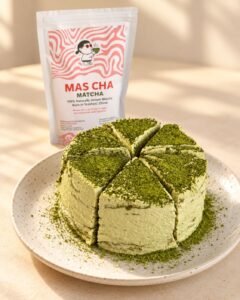
Chinese Matcha: Why Your “Japanese” Matcha Might Actually Be Chinese (And Why That’s a Good Thing)
Walk into any trendy cafe in Hackney or browse the shelves of a high-end health store, and you’ll see the same imagery: minimalist packaging, Japanese calligraphy, and perhaps a silhouette of Mount Fuji.
For years, we’ve been conditioned to believe a simple equation: Matcha = Japan.
But if, like me, you like to dig a little deeper below the surface, you’ll realise this isn’t the whole truth. In fact, there is a massive shift happening in the tea world that big brands are hesitant to talk about.
The “Japan” Illusion
Since the global matcha boom, demand has skyrocketed. To keep up with this demand, the supply chain has expanded beyond Japan’s borders.
However, marketing hasn’t caught up with reality. Many brands continue to lean heavily on Japanese imagery to justify premium price points, even if their supply chain is murky. It creates an illusion of exclusivity that often masks the true origin of the leaves.
Enter Guizhou: The World’s Matcha Super Factory
While visiting my family in China this year, I reconnected with the reality of the tea trade. My mother, a tea dealer for over 30 years, took me to the source of the “Green Gold” rush: Guizhou Province.
Specifically, the region surrounding the Fanjing Mountains (a UNESCO World Heritage site) has quietly become known in the industry as the “World’s Matcha Super Factory.”
According to industry reports, Guizhou has established thousands of hectares of tea gardens specifically designed for matcha production. This isn’t low-grade tea dust; this is high-altitude farming that rivals the best terroirs in the world.
The Quality Question: China vs. Japan
There is a misconception that Chinese matcha is inferior, often associated with the bitter, brown “culinary grade” powders found in supermarkets.
That might have been true 10 years ago, but today? The game has changed.
Top-tier producers in Guizhou have adopted:
- Traditional Shading Techniques: Covering the leaves to boost chlorophyll and L-Theanine (the amino acid that gives matcha its sweetness).
- Japanese Steaming Methods: Stopping oxidation immediately to lock in the bright green colour.
- High-Altitude Growing: The Fanjing Mountains provide a misty, cooler climate that naturally repels pests, meaning cleaner tea with less reliance on pesticides.
In blind taste tests, high-grade Guizhou matcha is often indistinguishable from its Japanese counterparts, offering that signature creamy, nutty, and umami profile we crave.
The MAS CHA Difference: Proudly Guizhou
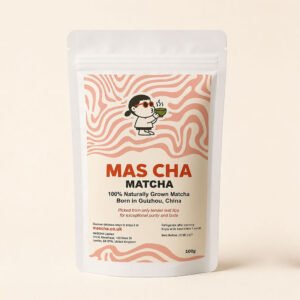
At MAS CHA, we decided early on that we wouldn’t play the “fake origin” game.
We are proud of our heritage. We don’t source from a faceless wholesaler; we source through my mum’s lifelong connections in the Guizhou tea community. We know exactly where our matcha comes from, and we know it’s the best quality because it’s what we drink every single day.
We believe that transparency tastes better.
The Verdict?
So, does it matter if your matcha comes from Uji, Japan, or Guizhou, China?
We believe the most important thing isn’t the flag on the package—it’s the quality of the powder inside. It’s the vibrant green colour, the clean energy boost, and the smooth taste.
Need More Details?
For brewing tips, storage advice, and answers to common questions,
visit our FAQ page.